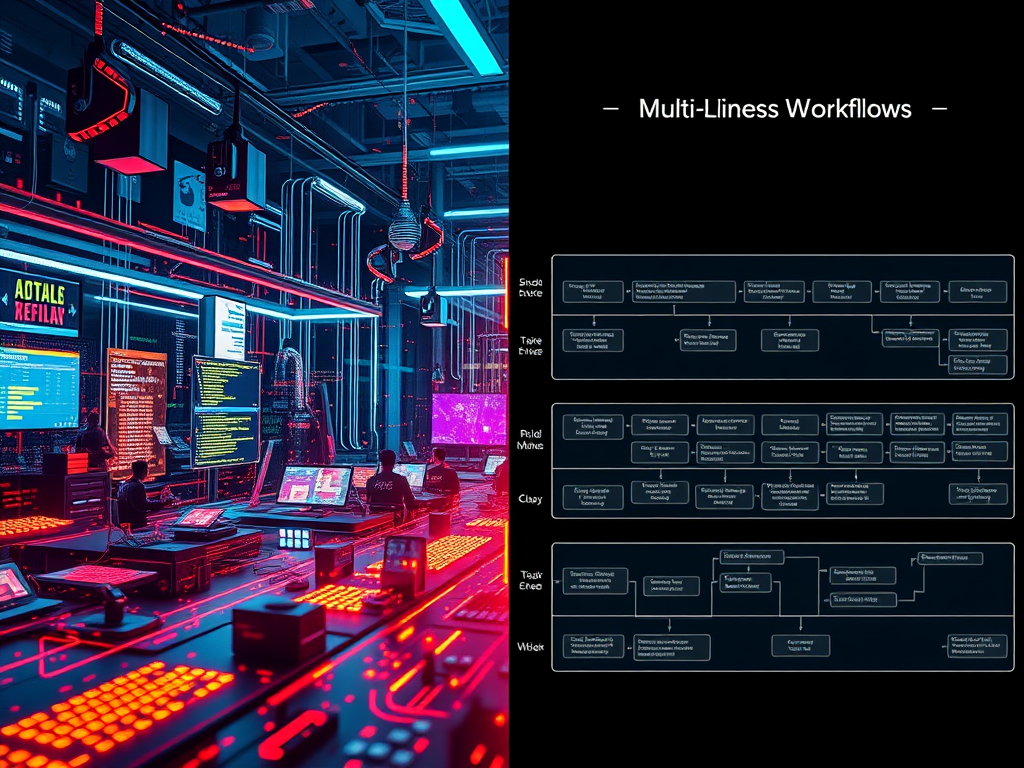
In the rapidly evolving landscape of business process automation, organizations are increasingly faced with choosing between two distinct approaches: Multi-Component Process (MCP) agents and automatic linear workflows. Understanding the fundamental differences between these methodologies can significantly impact operational efficiency, adaptability, and overall business performance.
Understanding the Fundamentals
MCP Agents represent a paradigm shift in automation, functioning as autonomous digital workers capable of handling complex, multi-step processes with minimal human intervention. These intelligent agents can understand context, make decisions based on predefined parameters, and adapt to changing circumstances in real-time.
Automatic Linear Workflows, by contrast, follow a more traditional sequence-based approach where processes move through predetermined steps in a fixed order. Each step must be completed before progressing to the next, creating a predictable but somewhat rigid execution path.
Adaptability and Decision-Making
The most striking difference between these approaches lies in their adaptability. MCP agents excel in environments where conditions frequently change or where multiple decision points exist. They can:
- Evaluate multiple data sources simultaneously
- Pivot based on new information
- Handle exceptions without disrupting the entire process
- Learn from previous executions to improve future performance
Linear workflows operate with greater predictability but less flexibility. While this makes them easier to design initially, it can create bottlenecks when exceptions occur or when processes need modification.
Implementation Complexity
Linear workflows typically require less upfront investment in terms of both time and technical expertise. Their straightforward nature makes them accessible to business users with minimal technical background, particularly when using modern low-code platforms.
MCP agents demand more sophisticated configuration and often require specialized knowledge in areas like machine learning, natural language processing, or decision theory. However, this initial complexity translates to greater long-term versatility and reduced maintenance needs once properly implemented.
Use Case Optimization
Each approach shines in different scenarios:
MCP Agents Excel In:
- Customer service automation requiring contextual understanding
- Complex approval processes with multiple stakeholders
- Fraud detection and risk assessment workflows
- Supply chain optimization with multiple variables
- Healthcare patient management and care coordination
Linear Workflows Perform Best For:
- Standardized onboarding processes
- Document generation and distribution
- Regular reporting and notification systems
- Simple approval chains with clear hierarchies
- E-commerce order processing and fulfillment
Integration Capabilities
MCP agents typically offer more sophisticated integration options, often leveraging AI to interpret and transform data between disparate systems. They can work across multiple platforms simultaneously, creating a more cohesive ecosystem.
Linear workflows generally rely on direct API connections between systems, which can be more straightforward to implement but may require additional middleware for complex integrations across legacy systems.
Performance Metrics and Optimization
When evaluating performance, MCP agents and linear workflows differ significantly:
MCP Agents:
- Measure success through outcome-based metrics
- Continuously optimize for efficiency gains
- Can identify and address bottlenecks autonomously
- Adapt to changing workloads without reconfiguration
Linear Workflows:
- Focus on completion rates and time-to-completion
- Require manual analysis to identify improvement opportunities
- Need explicit reconfiguration to address performance issues
- Maintain consistent processing speeds regardless of complexity
Future-Proofing Your Automation Strategy
The business landscape continues to evolve at an unprecedented pace, making adaptability a critical factor in automation decisions. MCP agents provide greater inherent flexibility for future changes, while linear workflows may require more significant overhauls as business needs evolve.
Organizations increasingly adopt a hybrid approach, deploying MCP agents for complex, variable processes while maintaining linear workflows for standardized, high-volume operations. This strategic combination leverages the strengths of both methodologies while mitigating their respective limitations.
Conclusion
The choice between MCP agents and automatic linear workflows isn’t binary but rather contextual. By understanding the strengths and limitations of each approach, organizations can strategically implement the right solution for specific business challenges.
As automation technology continues to mature, we’ll likely see further convergence between these methodologies, with linear workflows incorporating more intelligent decision-making capabilities and MCP agents becoming more accessible to non-technical business users.
The most successful automation strategies will be those that align technology choices with business objectives, focusing not just on immediate efficiency gains but on building adaptive systems capable of evolving alongside the organization.
What automation challenges is your organization facing, and which approach might best address your specific needs?

Leave a comment