How AI Voice Agents Are Reshaping Customer Experience in 2026 — And Why Small Businesses Can’t Ignore Them
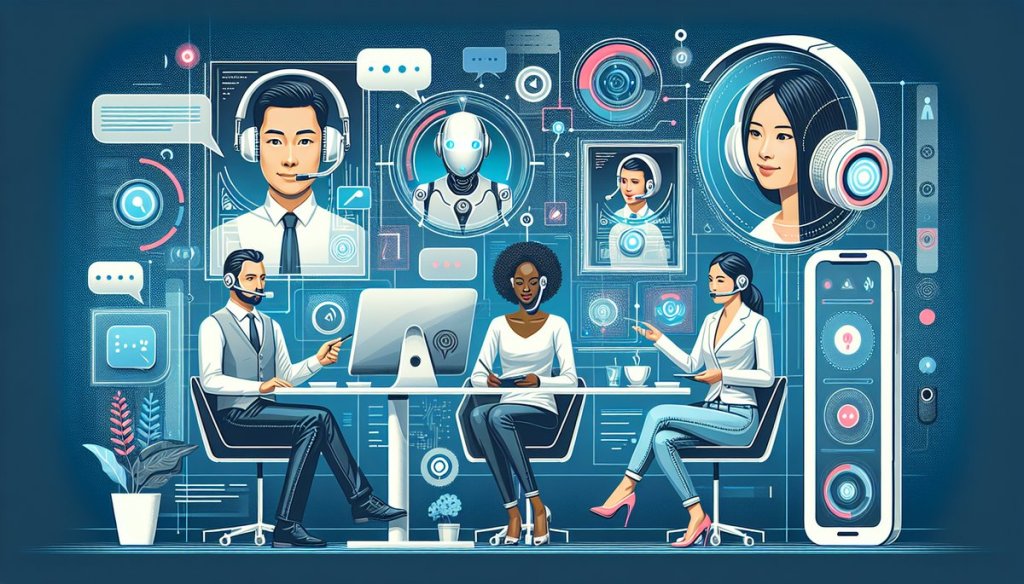
Picture this: It’s 2 AM, and a customer is frantically calling your business about a billing issue. In the past, they’d hit voicemail and grow frustrated. Today, an AI voice agent answers, understands their concern, pulls up their account, and resolves the issue in under three minutes—with the kind of natural conversation that makes them forget they’re talking to a machine.
This isn’t science fiction. It’s happening right now in 2026, and if you’re running a small business, ignoring this shift could mean watching your competitors pull ahead while you’re still playing phone tag.
The AI Voice Revolution Is Here (and the Stats Don’t Lie)
The numbers tell a compelling story: 34% of businesses now actively use AI across all customer interactions, with nearly half (49%) prioritizing generative AI chatbots for automation. But here’s what’s really fascinating—customer attitudes are evolving faster than many expected.
56% of customers now prefer AI if it resolves their issues quickly. Yet paradoxically, 83% still say speaking to a human is extremely important for complex problems. The takeaway? Customers don’t care whether they’re talking to AI or humans—they care about getting their problems solved efficiently.
By the end of 2026, Gartner predicts that 80% of customer service organizations will be using generative AI. The US alone will have 157.1 million voice assistant users. This isn’t a trend—it’s a fundamental shift in how business gets done.
What Exactly Are AI Voice Agents?

Key concept visualization
AI voice agents are sophisticated software systems that handle phone conversations with customers using natural language processing and machine learning. Unlike the frustrating phone trees of the past (“Press 1 for sales, press 2 for…”), these agents actually understand context, sentiment, and intent.
Here’s what makes them powerful for small businesses:
- 24/7 availability without staffing costs
- Instant response times with no hold music
- Natural conversations that feel human
- Seamless CRM integration pulling customer data in real-time
- Smart escalation to human agents when needed
- Real-time transcription for quality assurance
- Sentiment analysis to detect frustrated customers
The best part? Modern platforms offer no-code deployment, meaning you can have a voice agent up and running in days, not months.
How They’re Transforming Customer Experience
Cost Efficiency That Actually Makes Sense
Small businesses typically see 70-80% deflection rates—meaning seven or eight out of ten calls get resolved by the AI without human intervention. That translates directly to your bottom line. You’re not replacing your team; you’re freeing them up to handle the complex, high-value interactions that actually need human judgment.
The Personalization Paradox
Here’s something counterintuitive: AI voice agents are making customer service more personal, not less. Because they integrate with your CRM, they instantly access customer history, preferences, and past issues. They greet returning customers by name, reference previous conversations, and make context-aware suggestions.
70% of CX leaders now see chatbots as architects of personalized customer journeys. The AI remembers everything about every customer—something that’s impossible for human agents juggling hundreds of interactions.
Speed That Sets You Apart
51% of consumers now prefer bots for immediate service. They’d rather get an instant, accurate answer from AI than wait on hold for a human. For routine questions—order status, appointment scheduling, account updates—AI voice agents are simply faster.
The Small Business Advantage (Yes, Really)
Process or workflow illustration
You might think this technology is only for enterprises with massive budgets. You’d be wrong.
Quick Deployment, Fast ROI
Modern AI voice platforms are designed for businesses like yours. With pre-built templates, drag-and-drop customization, and branded calling features, you can launch a professional voice agent without hiring engineers or consultants.
The Competitive Equalizer
Your larger competitors have been using AI for years. 47% of businesses already use AI for self-service through virtual assistants. If you’re not adopting this technology, you’re not just behind—you’re actively losing customers to competitors who answer faster, stay available longer, and solve problems more efficiently.
Real-World Impact
Businesses using AI voice agents report:
– Reduced support costs by 40-60%
– Increased customer satisfaction scores
– Improved answer rates through branded calling
– Better agent morale (humans handle interesting problems, not repetitive ones)
The Reality Check: What AI Can’t (Yet) Do
Let’s be honest—AI voice agents aren’t perfect. 53% of customers find AI harder to interact with than humans for certain tasks. When it comes to emotionally charged issues, fraud concerns, or truly novel problems, humans still win.
The sweet spot? Use AI for:
– FAQs and routine inquiries
– Appointment scheduling
– Order status and tracking
– Basic troubleshooting
– After-hours coverage
Keep humans for:
– Complex technical issues
– Sensitive account matters
– Angry or distressed customers
– Sales conversations requiring nuance
83% of customers say human interaction is extremely important for serious issues. The winning strategy isn’t AI or humans—it’s AI and humans, each handling what they do best.
2026 Trends You Need to Know
The Trust Factor Is Rising
78% of AI decision-makers now trust AI outputs—a massive shift from just a few years ago. This trust is translating into broader adoption and more sophisticated use cases.
Self-Service Success Is Climbing
One in four brands will see a 10% increase in successful self-service by the end of 2026. The AI is getting better, and customers are getting more comfortable using it.
Hybrid Models Are the Future
The smartest companies aren’t choosing between AI and humans. 42% expect generative AI to significantly influence voice interactions, while maintaining human oversight for quality and escalations.
Voice Biometrics and Real-Time Intelligence
Forward-thinking businesses are layering in:
– Voice biometrics (60% importance rating) for security
– Real-time transcription (59% priority) for compliance
– GenAI-powered agent suggestions (46% adoption) for human reps
Getting Started: Your Action Plan
If you’re a small business owner reading this and feeling behind, here’s the good news: you can start small and scale up.
Step 1: Identify Your Use Case
What questions does your team answer repeatedly? Where do customers get stuck after hours? Start there.
Step 2: Choose Your Platform
Look for tools offering:
– No-code setup
– CRM integration
– Customizable scripts
– Human escalation paths
– Analytics and reporting
Step 3: Test and Iterate
Launch with a limited scope—maybe just after-hours calls or one specific department. Gather feedback, refine, and expand.
Step 4: Train Your Team
Your human agents should know how the AI works, when it escalates, and how to review transcripts for continuous improvement.
The Bottom Line
AI voice agents aren’t coming—they’re here. 56% of customers believe bots will have completely natural conversations by the end of 2026, and that future is arriving faster than most businesses realize.
For small businesses, this technology represents a rare opportunity: a chance to deliver enterprise-level customer experience without enterprise-level costs. You can answer every call, resolve issues instantly, and free your team to focus on the work that actually requires human creativity and empathy.
The question isn’t whether to adopt AI voice agents. It’s whether you’ll lead the shift or scramble to catch up when customers start expecting this level of service as the baseline.
The choice is yours. But in 2026, standing still means falling behind.

Leave a comment