
AI Agents and Automation Trends 2026: The Enterprise Revolution Is Here
The artificial intelligence landscape is undergoing a seismic shift. We’re moving beyond simple chatbots and recommendation engines into an era where autonomous AI agents are fundamentally transforming how businesses operate. By 2026, these intelligent systems won’t just assist human workers—they’ll independently manage complex workflows, collaborate with other agents, and make decisions that drive measurable business outcomes.
The numbers tell a compelling story. The AI agents market is exploding from $8.29 billion in 2025 to a projected $12.06 billion in 2026, representing a staggering 45.5% compound annual growth rate. This isn’t incremental progress—it’s a wholesale reimagining of enterprise automation. As organizations race to implement agentic AI trends, the question is no longer whether to adopt these technologies, but how quickly you can integrate them before your competitors do.
For business leaders, technologists, and decision-makers, understanding the AI agents 2026 landscape isn’t optional—it’s essential for survival. This comprehensive guide explores the most critical automation trends reshaping the business world and provides actionable insights for navigating this transformation.
[IMAGE_PLACEHOLDER – Featured image showing AI agents collaborating in a modern enterprise environment]
The Explosive Growth of the AI Agent Market
The financial momentum behind agentic automation speaks volumes about its transformative potential. In just the first half of 2025, investors poured over $2.8 billion into Agentic AI funding, signaling unprecedented confidence in this technology’s future.
This investment surge isn’t speculative hype—it’s driven by tangible results. Organizations implementing AI agents are seeing dramatic improvements in operational efficiency, customer satisfaction, and bottom-line performance. The technology has matured from experimental prototypes to production-ready solutions that deliver measurable ROI.
What’s Driving AI Agent Market Growth?
Several converging factors are accelerating the adoption of autonomous AI workflows across industries:
Advanced language models have given agents unprecedented ability to understand context, communicate naturally, and reason through complex scenarios. These capabilities make AI agents far more versatile than previous automation technologies.
Cloud infrastructure maturity now provides the scalable computing power needed to run sophisticated multi-agent systems without prohibitive costs. Organizations can deploy agent networks that would have been economically unfeasible just two years ago.
Integration ecosystem expansion means AI agents can now seamlessly connect with existing enterprise systems, from CRM platforms to supply chain management tools. This interoperability eliminates the integration barriers that previously hindered automation projects.
[IMAGE_PLACEHOLDER – Infographic showing AI agent market growth statistics and projections]
Enterprise Applications: The 40% Embedding Milestone
Key concept visualization
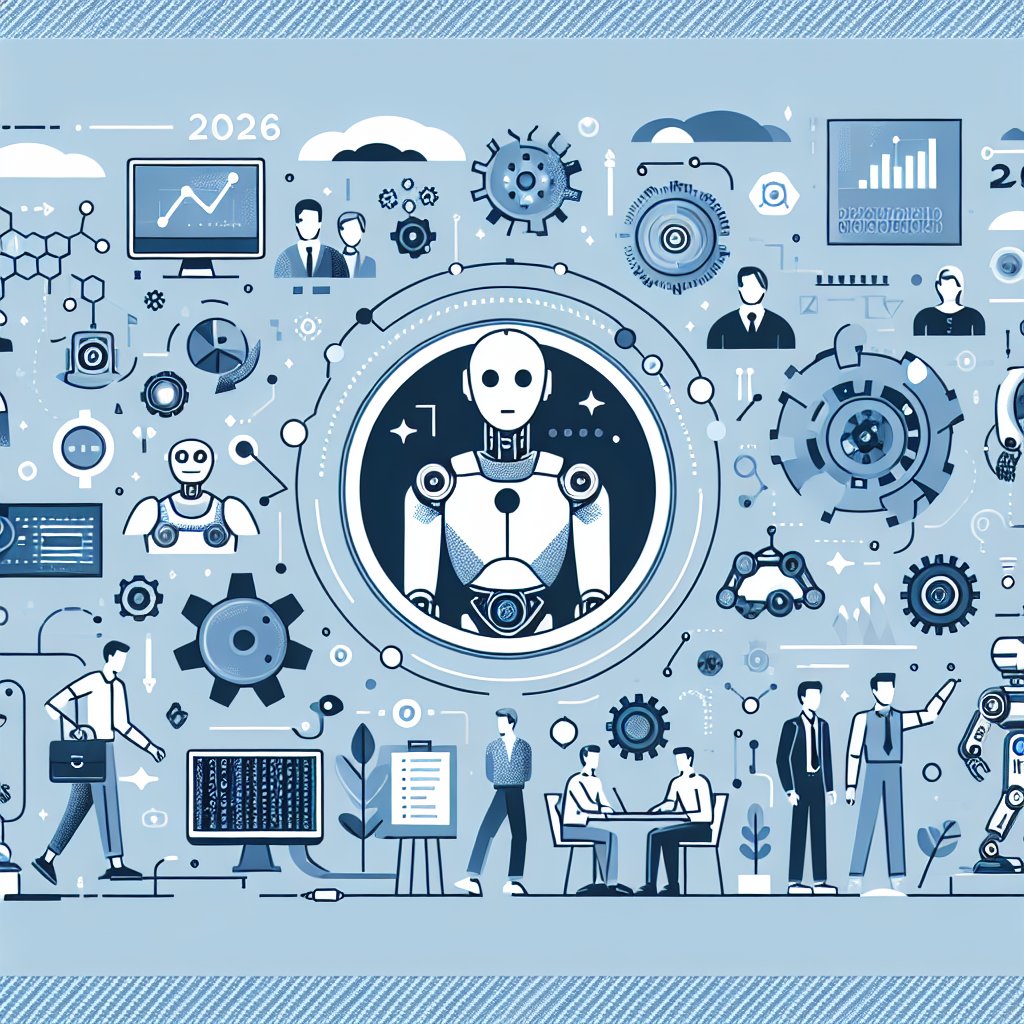
Perhaps the most significant indicator of mainstream adoption is this projection: by 2026, 40% of enterprise applications will embed task-specific AI agents, up from low single-digits today. This represents a fundamental shift in how software is designed and delivered.
Traditional enterprise software required humans to initiate actions, input data, and make decisions. The new generation of applications comes with built-in AI agents that proactively handle routine tasks, identify opportunities, and execute complex processes with minimal human intervention.
Real-World Applications Across Industries
Customer service platforms are leading the charge. By 2028, 70% of customers will use conversational AI for customer service journeys, handling everything from simple inquiries to complex problem resolution. These agents don’t just answer questions—they understand customer intent, access relevant data across systems, and orchestrate solutions.
Financial services are deploying AI agents for fraud detection, risk assessment, and personalized financial planning. These agents continuously monitor transactions, identify anomalies, and take preventive actions in real-time—operating at speeds and scales impossible for human teams.
Supply chain management benefits from agents that autonomously optimize inventory levels, predict disruptions, and coordinate logistics across global networks. One agent might monitor weather patterns while another tracks shipping routes, collaborating to reroute shipments before delays occur.
Human resources departments are using AI agents to screen candidates, schedule interviews, onboard new employees, and answer policy questions. This frees HR professionals to focus on strategic initiatives like culture development and talent strategy.
Multi-Agent Systems: The Power of Specialized Collaboration
The future of enterprise automation isn’t single, all-knowing AI systems—it’s networks of specialized agents working together. By 2027, 70% of multi-agent systems will have agents with narrow, focused roles, mirroring how human organizations structure teams around specialized expertise.
This architectural approach offers significant advantages over monolithic AI systems. Specialized agents become experts in their domains, delivering higher accuracy and more nuanced decision-making. When issues arise, organizations can update or replace individual agents without disrupting the entire system.
How Multi-Agent Systems Work
Think of multi-agent systems as digital organizations. A sales agent might identify qualified leads, then hand off to a product specialist agent that recommends solutions based on customer needs. A pricing agent calculates optimal quotes while a contract agent generates agreements. Finally, an onboarding agent ensures smooth implementation.
These agents communicate through standardized protocols, sharing information and coordinating actions. They negotiate priorities, resolve conflicts, and adapt to changing circumstances—all without human intervention for routine scenarios.
The emergence of federated AI agents takes this concept further. These agents can operate across organizational boundaries, enabling automated B2B transactions, supply chain coordination, and partner ecosystem management. Imagine your procurement agent negotiating directly with a supplier’s sales agent, finding optimal terms for both parties in seconds.
[IMAGE_PLACEHOLDER – Diagram illustrating multi-agent system architecture and agent collaboration]
Reinventing Operating Models for Agentic AI
Process or workflow illustration
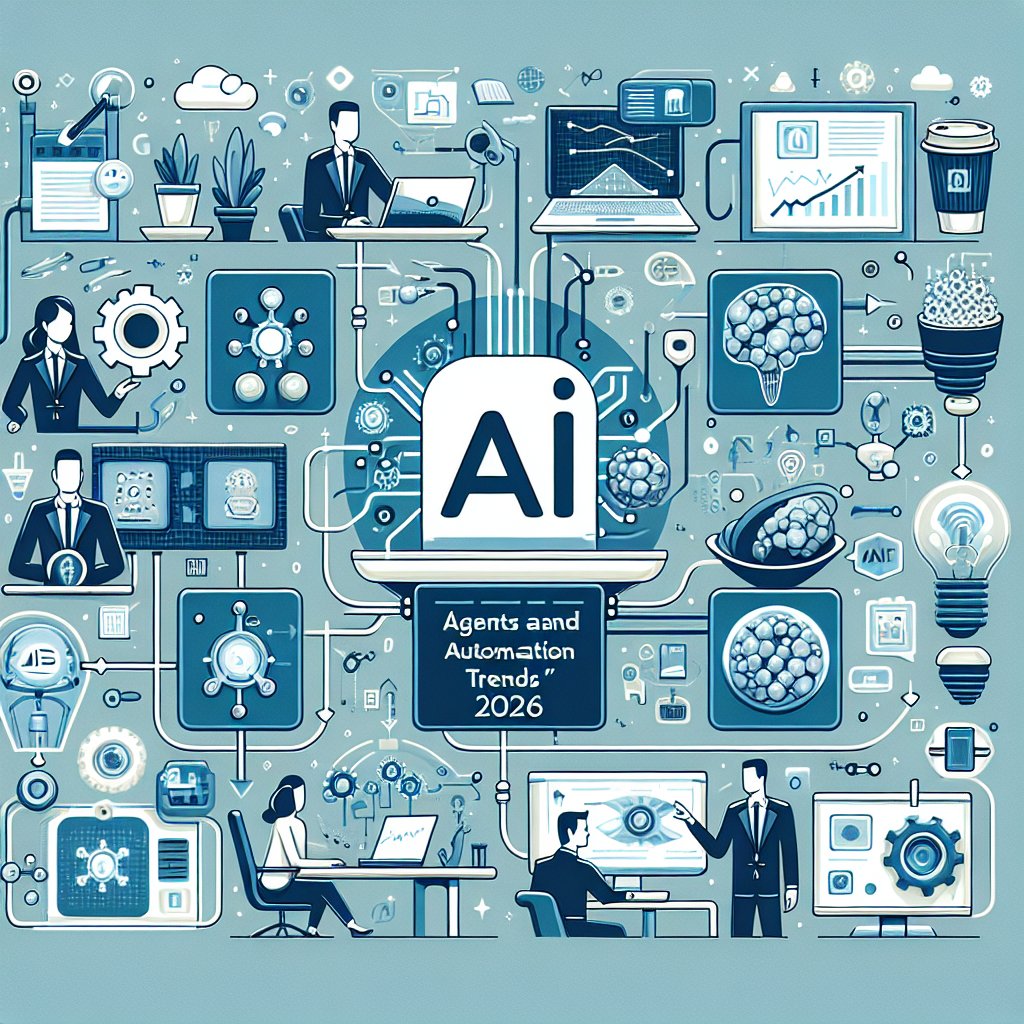
Here’s a sobering statistic: 78% of executives say they must reinvent operating models for agentic AI value. Simply deploying AI agents into existing processes won’t unlock their full potential. Organizations need fundamental transformations in how they structure work, make decisions, and measure success.
The Operating Model Transformation
Process redesign is the first imperative. Legacy processes were designed around human capabilities and constraints. Agentic automation enables entirely new workflows that leverage AI speed, consistency, and analytical power. Leading organizations are conducting comprehensive process audits to identify opportunities for agent-driven transformation.
Decision rights evolution requires clarity about which decisions AI agents can make autonomously versus which require human judgment. This isn’t just about technical capabilities—it involves legal, ethical, and strategic considerations. Smart organizations are developing decision frameworks that empower agents while maintaining appropriate oversight.
Talent strategy shifts as AI agents handle routine tasks. The workforce of 2026 focuses on higher-value activities: strategic planning, creative problem-solving, relationship building, and agent oversight. This requires significant investment in reskilling programs and organizational change management.
Performance metrics must evolve beyond traditional KPIs. How do you measure agent effectiveness? What constitutes successful human-agent collaboration? Organizations are developing new frameworks that capture the unique value AI agents deliver.
Governance-as-Code AI: Managing Risk at Scale
As AI agents gain autonomy, governance becomes paramount. The emerging paradigm of governance-as-code AI embeds compliance rules, ethical guidelines, and risk parameters directly into agent behavior.
Rather than relying on post-hoc audits, governance-as-code ensures agents operate within defined boundaries from the start. If an agent encounters a scenario outside its authorization, it automatically escalates to human decision-makers or consults specialized governance agents.
Key Governance Considerations
Transparency and explainability remain critical. Organizations need clear audit trails showing why agents made specific decisions. This is essential for regulatory compliance, troubleshooting issues, and building stakeholder trust.
Security and privacy take on new dimensions when autonomous agents access sensitive data and execute transactions. Robust authentication, authorization, and data protection mechanisms are non-negotiable.
Bias monitoring and mitigation ensures agents don’t perpetuate or amplify unfair outcomes. Regular testing, diverse training data, and ongoing monitoring help maintain ethical AI operations.
Version control and testing protocols ensure agent updates don’t introduce unexpected behaviors. Leading organizations treat AI agents like mission-critical software, with rigorous development, testing, and deployment processes.
[IMAGE_PLACEHOLDER – Flowchart showing governance-as-code AI framework and decision processes]
Autonomous AI Workflows: From Concept to Reality
The promise of autonomous AI workflows is finally being realized at scale. These are end-to-end processes where AI agents handle every step, from initiation through completion, with human involvement only for exceptions or strategic decisions.
Consider invoice processing: An agent receives invoices via email, extracts relevant data, matches line items to purchase orders, identifies discrepancies, communicates with vendor agents to resolve issues, routes approvals through the appropriate chain, schedules payments, and updates financial systems. The entire process runs 24/7 with near-perfect accuracy.
Building Effective Autonomous Workflows
Start with high-volume, rules-based processes where agents can deliver immediate value. These quick wins build organizational confidence and provide learning opportunities before tackling more complex workflows.
Design for human-agent collaboration rather than complete automation. The most effective workflows leverage AI for speed and consistency while preserving human judgment for nuanced decisions.
Implement robust monitoring and alerting so teams can quickly identify and address issues. Autonomous doesn’t mean unmonitored—it means self-executing within defined parameters.
Plan for continuous improvement by analyzing agent performance data, gathering user feedback, and regularly updating agent capabilities. The best autonomous workflows evolve over time.
Preparing Your Organization for the AI Agent Revolution
The transition to agentic AI requires strategic planning and committed execution. Here are actionable steps to position your organization for success in 2026 and beyond:
1. Conduct an AI Agent Readiness Assessment
Evaluate your current automation maturity, data infrastructure, and organizational readiness. Identify processes that are prime candidates for agentic automation based on volume, complexity, and business impact.
2. Develop a Phased Implementation Roadmap
Resist the temptation to automate everything at once. Start with pilot projects that demonstrate value, build organizational capability, and generate momentum for broader adoption.
3. Invest in Data Infrastructure
AI agents are only as good as the data they access. Ensure your data is clean, well-organized, and accessible. Implement data governance frameworks that support both human and agent users.
4. Build Cross-Functional AI Agent Teams
Successful implementations require collaboration between IT, business units, legal, compliance, and other stakeholders. Create dedicated teams with clear accountability for agent development and deployment.
5. Prioritize Change Management and Training
The human side of AI agent adoption is often more challenging than the technical implementation. Invest in comprehensive training programs, clear communication, and support structures that help employees adapt to new ways of working.
6. Establish Governance Frameworks Early
Don’t wait until you have dozens of agents deployed to think about governance. Establish clear policies, oversight mechanisms, and ethical guidelines from the start.
The Competitive Imperative
Organizations that successfully harness agentic AI trends will enjoy substantial competitive advantages: faster operations, lower costs, better customer experiences, and more strategic use of human talent. Those that delay risk being left behind by more agile competitors.
The AI agents 2026 landscape represents both tremendous opportunity and significant challenge. The technology is ready. The market is growing explosively. The question is whether your organization is prepared to seize this moment.
Conclusion: Your AI Agent Journey Starts Now
The transformation to agentic automation isn’t a distant future scenario—it’s happening right now. With the AI agent market growing at 45.5% annually and 40% of enterprise applications embedding AI agents by 2026, the window for competitive advantage is rapidly closing.
The organizations that will thrive in this new landscape are those that act decisively today. They’re reimagining operating models, investing in multi-agent systems, implementing governance-as-code AI, and building the capabilities needed for autonomous AI workflows.
The AI agent revolution won’t wait for those who hesitate. Start your journey today by assessing your readiness, identifying high-impact use cases, and developing a strategic implementation roadmap. The future of enterprise automation is autonomous, intelligent, and collaborative—and it’s arriving faster than most organizations realize.
Are you ready to lead in the age of AI agents, or will you be racing to catch up? The choice you make today will determine your competitive position for years to come.
Ready to explore how AI agents can transform your organization? Download our comprehensive AI Agent Implementation Guide or schedule a consultation with our automation experts to develop your customized roadmap for 2026 and beyond.

Leave a comment